
BUYING GUIDE
Who Actually Makes South African Blinds, and Why It Matters When One Breaks
Galaxy Blinds · 21 September 2026 · 7 min read

Almost nobody asks who made their blinds until something stops working. Then it becomes the only question that matters, because whether a bracket, a chain or a single slat can still be bought in five years depends entirely on who built the thing and where. A blind assembled locally by an established manufacturer can usually be repaired. A container load of imported flat pack usually cannot.
Key takeaways
- The question that decides your next ten years is not what the blind costs, it is whether the parts still exist when one fails.
- Custom blinds are not made by the company that comes to your house. A manufacturer builds them, a dealer measures, fits and services them.
- Locally assembled product usually means shorter lead times and, more importantly, spares that are still on a shelf in Johannesburg.
- Manufacturers who sell only through dealers are not competing with your installer, which is why your installer will happily name them.
- Ask two questions of any quote: who manufactures this, and who comes back if it fails.
How does a custom blind actually get made?
Three parties are involved and most homeowners only ever meet one. A manufacturer designs and assembles the product and holds the component stock. A dealer measures your windows, specifies the right product, orders it built to those measurements and installs it. A fabric house supplies the material. When you buy a custom blind you are buying from all three, and the quote only names one of them.
That structure is normal and it is a good thing. It is why a small local installer can offer a range as wide as a national chain, and why a manufacturer can invest in tooling and component stock that no single fitter could justify. It is also why the manufacturer behind your blind matters, because they are the ones who will or will not have a replacement bracket in three years.
Who manufactures blinds in South Africa?
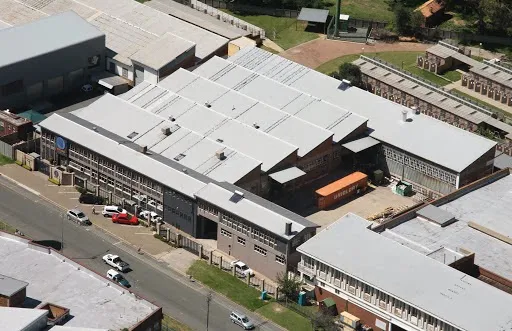
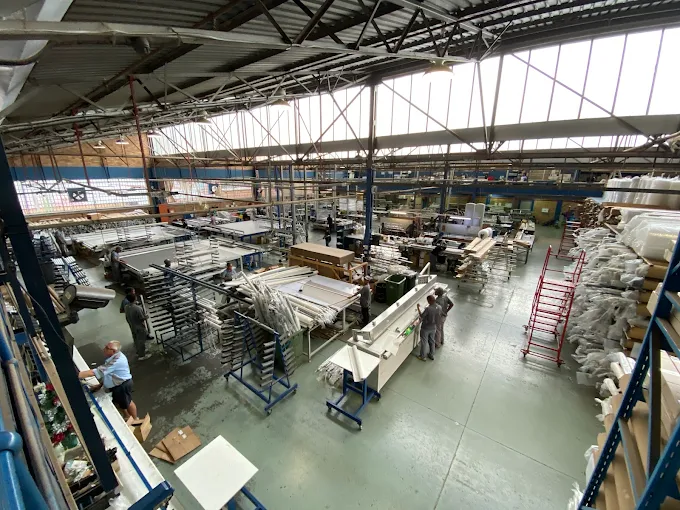
There is a real local manufacturing base, which surprises people who assume every blind is imported. Blind Designs has been distributing blinds in South Africa for over 40 years and describes its product as “proudly designed and assembled in South Africa”, distributed throughout Southern Africa through a dealer network. They also recycle 80% of the material waste created in building a blind and donate a percentage of profits to community projects, which is not why you would choose them but is worth knowing.
The commercial point is the dealer network. Blind Designs sells through dealers rather than direct to homeowners, which means your installer is not competing with the manufacturer and has no reason to hide who made your blind. If a supplier will not tell you who manufactures what they are quoting, that is worth a raised eyebrow.
Does locally assembled actually mean anything?
It means two practical things and one thing it does not mean.
It means lead times measured against a local production queue rather than a shipping schedule. A blind built here does not wait for a container, and a remake because a measurement was wrong does not cost you two months.
It means spares. This is the one that matters in year four. Component stock held locally is component stock you can actually get. When a chain jumps its sprocket or a bracket works loose, a local manufacturer can supply the part and your installer can fit it in an afternoon. When the blind came off a shipping container in a flat pack, the honest answer is often that the whole blind gets replaced.
What it does not mean is that every component is South African. Fabrics, motors and some hardware are sourced internationally by almost everyone in this industry, including us. “Assembled in South Africa” is a claim about where the blind was built and where the stock sits, not a claim that every part was made here, and anyone telling you otherwise is overselling.
Imported or local: what actually differs
| Locally assembled custom | Imported ready made | |
|---|---|---|
| Sizing | Built to your measured reveal | Nearest standard size, then cut or lived with |
| Remake if wrong | Local production queue | Next shipment, or never |
| Spare parts in year four | Usually available from local stock | Usually replace the whole blind |
| Who services it | The dealer who fitted it | Often nobody |
| Upfront price | Higher | Lower, genuinely |
That last row is not a typo and we are not going to pretend otherwise. Ready made blinds are cheaper on the day. The argument for custom is what the table shows above that row, and if a window is in a spare room nobody uses, a ready made blind is a perfectly sensible decision. We would rather say that than lose your trust over a spare room.
What should you ask before you accept a blinds quote?
Two questions, and they take ten seconds.
Who manufactures this? A supplier who names the manufacturer is telling you the product has a traceable source and a spares chain, and a real manufacturer publishes its product specifications openly. A supplier who will not name it is either buying opportunistically from whoever was cheapest that month, or reselling something they cannot support.
Who comes back if it fails? The answer you want is the company you are talking to, using their own installation teams. Subcontracted fitting is not automatically bad, but it does decide how quickly anyone returns when a bracket works loose, and it is worth knowing which you are buying.
What usually breaks, and is it fixable?
The three common failures are a chain jumping its sprocket, a blind rolling up crooked and a mechanism taking more weight than it was specified for. None of the three is usually the fabric’s fault, and all three are normally fixable if the parts exist.
A crooked roll almost always means the brackets were not fitted level, which is an adjustment rather than a replacement. A jumping chain usually means the mechanism was under specified for the blind’s weight, which is a specification failure and a genuine reason to go back to whoever quoted it. Keeping blinds running is mostly about fitting them correctly and cleaning them without wrecking them, which we cover in our guide to cleaning blinds without ruining them.

COMMON QUESTIONS
Frequently asked questions
Are blinds made in South Africa?
Yes. There is an established local manufacturing and assembly base, with companies such as Blind Designs designing and assembling in South Africa and distributing through dealer networks across Southern Africa. Fabrics, motors and some hardware are commonly imported and then built into the finished blind here.
Why can I not buy directly from the manufacturer?
Most blind manufacturers sell only through dealers, because a custom blind has to be measured, specified and installed correctly to work at all. The manufacturer builds to a measurement someone else is responsible for, which is why they will not take that measurement from a homeowner over the phone.
Will I be able to get spare parts in five years?
On a locally assembled blind from an established manufacturer, usually yes, because the component stock is held locally and the ranges stay in production for years. On imported ready made product the honest answer is often no, and the repair becomes a replacement.
Is a locally made blind better quality than an imported one?
Not automatically, and anyone who tells you it is flatly is selling. The reliable advantages of local assembly are fit, lead time and spares, because the blind is built to your measurement and the parts stay reachable. Quality itself depends on the specification and the fitting.
How do I find out who made my existing blinds?
Check the head rail. Most manufacturers mark the bracket or the tube end, and a photograph of that marking is usually enough for an installer to identify the range and tell you whether parts are still available. Send us a photo if you are not sure.
THE GALAXY STANDARD
Ask us who makes yours
If you already have blinds and you are wondering whether that sticking mechanism is fixable, send a photo of the head rail and the bracket. We will tell you what it is and whether the part still exists, which is a two minute answer that saves people a replacement quote surprisingly often.
If you are buying, request a free measure and quote, and ask us both questions from this post. We will answer them in writing.