
ROLLER BLINDS
Light Filter Roller Blinds: Soft Light, Daytime Privacy, Low Upkeep
Galaxy Blinds · 2 September 2026 · 8 min read
Light filter roller blinds solve one specific problem: they give you privacy during the day without turning the room dark. The fabric diffuses light rather than blocking it, so at midday the room stays bright and usable while people outside cannot see in. That is the gap between a screen fabric, which keeps your view and your glare, and a blockout, which takes both away.
Key takeaways
- Light filter fabric gives daytime privacy with a bright room. It does not give privacy at night with the lights on.
- Screen fabrics keep your view out, at 1, 3 or 5 percent openness. Light filter trades the view for softer light and more privacy.
- Blockout is the only roller fabric for a genuinely dark room, and even then light escapes down the sides of the reveal.
- A single roller blind reaches 4000mm wide and 5000mm long, subject to fabric width and weight.
- Light filter is the middle of the roller range on price, and the easiest of the three to live with day to day.
What problem do light filter roller blinds actually solve?
They solve the daytime privacy problem. Most homes have a window where the choice is being overlooked or sitting in the dark, and neither is acceptable at 2pm on a Tuesday. A light filter fabric sits between those two states: it obscures the view in from outside while still passing enough light that you do not reach for a lamp.
The rooms where this matters are predictable. Street facing lounges in a townhouse complex, ground floor bedrooms with a neighbour’s wall two metres away, home offices where you want light on the desk but not a window full of passers by. In all three, a screen fabric feels too exposed and a blockout feels like a cave.
Light filter, screen or blockout: which roller do you need?
Choose screen if the view out is the point and glare is the problem. Choose light filter if privacy during the day matters more than the view. Choose blockout if the room must go dark, for sleeping or for a screen. The three fabrics are the same product with different jobs, and picking the wrong one is the most common regret we hear about.
| Fabric | What it does | View out | Daytime privacy | Privacy at night | Best rooms |
|---|---|---|---|---|---|
| Screen | Cuts glare and heat, keeps the view. Available in 1, 3 and 5 percent openness | Yes, clearest at 5 percent | Partial, less at higher openness | No | Living rooms with a view, offices, west facing glass |
| Light filter | Diffuses light into a soft, even glow | No, obscured | Yes, this is its job | No, silhouettes show | Street facing lounges, ground floor rooms, bathrooms, home offices |
| Blockout | Excludes light through the fabric, adds thermal control | No | Yes | Yes through the fabric, but the reveal edges leak | Bedrooms, nurseries, media rooms, shift workers |
A roller blind is a binary product: fully open or fully closed, with nothing in between except how far you drop it. That is worth knowing before you buy, because if you want to change the character of the light without changing how much window is covered, you want a day and night blind or a layered setup instead. All three fabrics sit on the roller blinds range, and there is a dedicated blockout roller page if darkness is the brief.
Do light filter blinds give privacy at night?
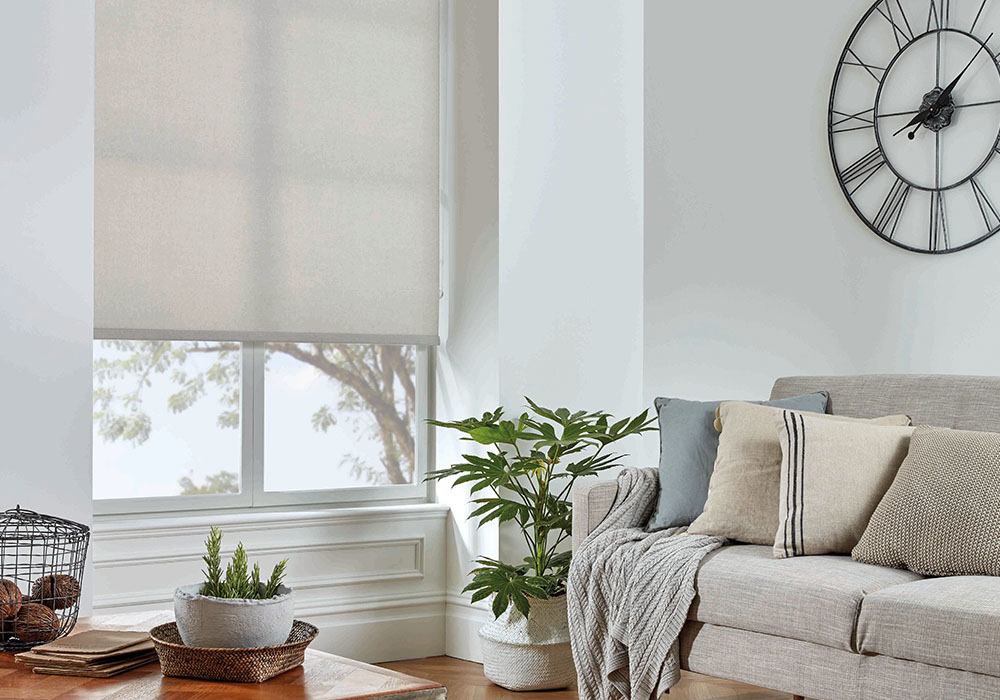
No. This is the honest limit of the product and the thing worth saying plainly. Any translucent fabric with a light on behind it will show movement and silhouettes from outside, because the fabric is passing light in both directions. Daytime privacy works because it is brighter outside than in, and after dark that reverses.
If a room needs privacy at night, either layer a blockout curtain over the light filter blind, or specify blockout on the roller and accept the darker daytime. In a bedroom the layered option is almost always the right one, because you want soft light at breakfast and darkness at 10pm from the same window. Our guide to choosing blinds or curtains room by room works through that pairing per room.
Why are light filter rollers low maintenance?
Because there is nothing to collect dust. A roller blind is one flat panel with no slats, no cords running through it and no folds, so dusting it takes seconds against the ten minutes a venetian needs slat by slat. There are also fewer moving parts to go wrong: a tube, a bracket, and a chain or a motor.
Cleaning method depends on the fabric, so check the specific instruction for the range you choose rather than assuming. Screen fabrics can be dusted and wiped with a damp cloth. Light filter and blockout fabrics vary by range, and some should not be wetted at all, which is why the correct answer is the care note that comes with your fabric. Getting this wrong is the fastest way to put a permanent watermark on an otherwise perfect blind, so read how to clean blinds without ruining them before you reach for a cloth.
How big can a roller blind be, and how do you measure?
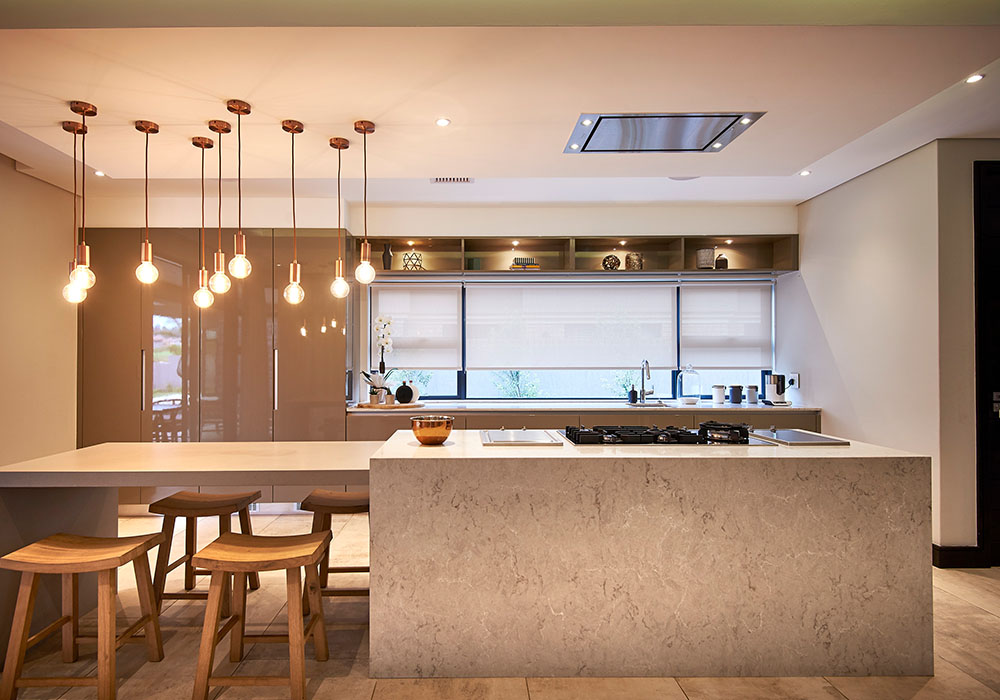
A single roller reaches 4000mm wide and 5000mm long, though the real limit is the width your chosen fabric is woven in and how much the finished blind weighs. Wider openings become two or more blinds side by side. Very long drops get heavy, which is where a crank handle or a motor stops being a luxury.
For measuring, the rule that saves money is to measure the width in three places, at the top, middle and bottom of the reveal, and work from the smallest. Reveals are rarely square, and a blind cut to the widest measurement will not fit. Decide before you measure whether the blind sits inside the reveal or face fixed over it, because the two give different numbers and mixing them up is the most common ordering error there is.
Should you choose a chain, a crank or a motor?
Chain for normal windows, crank for heavy or high blinds, motor for anything you will adjust often or cannot reach. Galaxy Blinds offers a plastic or steel chain mechanism, a crank handle, a 220V motor and a battery motor across the roller range, so the decision is about the window rather than the budget alone.
Two practical notes. Steel chain over plastic is worth it on a heavy blind and in a busy household, because plastic is what fails first. And a battery motor removes the need for hardwiring, which matters if the wall is already tiled or plastered. Full detail on the motor options sits on the motorised blinds page.
What goes wrong with roller blinds, and how long do they last?
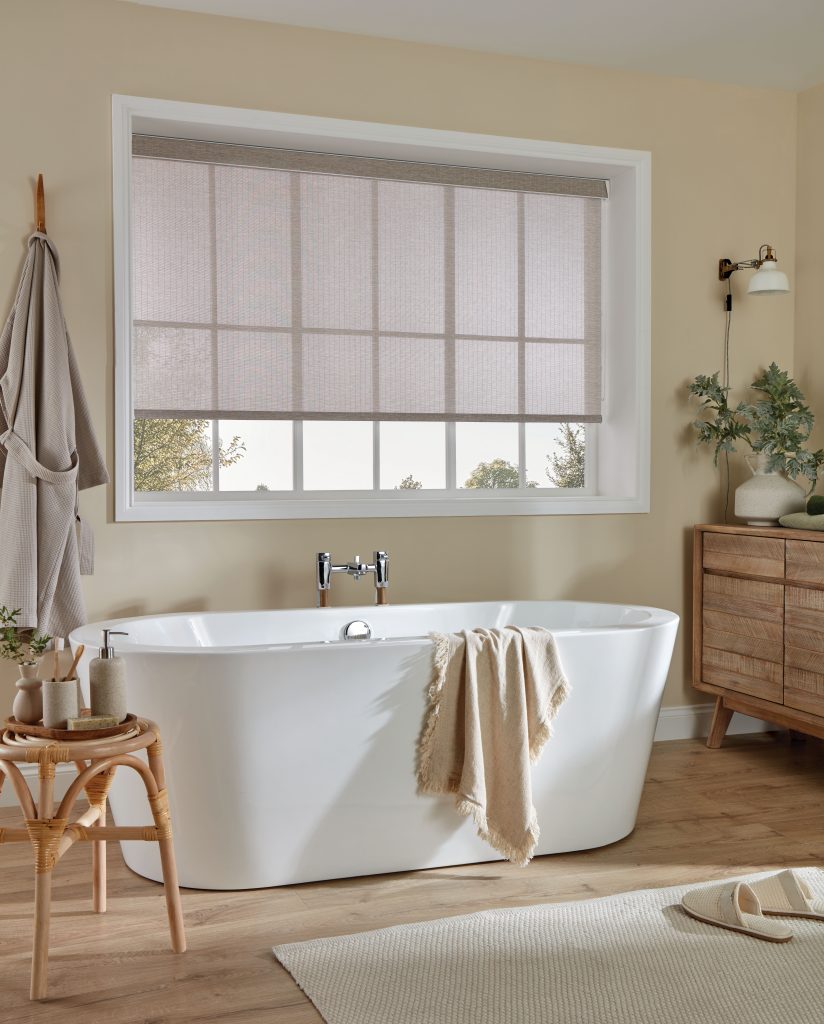
The three common failures are a chain that jumps its sprocket, a blind that rolls up crooked, and fabric that fades on a hot west facing window. None of the three is usually the fabric’s fault. A crooked roll almost always means the brackets were not fitted level, and a jumping chain means the mechanism is taking more weight than it was specified for.
A properly specified roller on level brackets outlives most things in a house, and the failure point is nearly always specification rather than wear. That is the argument for a site measure over ordering to your own numbers: the blind that lasts is the one sized and weighted correctly for its opening, and nobody can judge that from a photograph.
COMMON QUESTIONS
Frequently asked questions
What is the difference between light filtering and blockout roller blinds?
Light filtering fabric diffuses light and keeps the room bright while obscuring the view in. Blockout fabric excludes light through the fabric and darkens the room. Choose light filtering for daytime privacy in a living space, and blockout for a bedroom or a media room.
Can you see through light filter blinds at night?
From outside, yes, in the sense that movement and silhouettes show when the lights are on inside. Light filter fabric passes light both ways, so daytime privacy does not carry over after dark. Layer a blockout curtain over it if night privacy matters.
Are roller blinds cheaper than curtains?
Per window, usually yes, and they cost less to keep, because a roller is wiped in place while curtains need taking down and laundering. Curtains become the cheaper option across very wide openings, where a single track spans further than one blind can.
How do you clean a light filter roller blind?
Follow the care note for your specific fabric, because light filter and blockout fabrics vary by range and some must not be wetted. Dust regularly with a soft brush or a vacuum brush attachment, and never scrub a mark, since that lifts the finish and leaves a permanent patch.
Can roller blinds be cut down to fit?
Not usefully. A roller blind is made to the measurement of its opening, tube, brackets and fabric together, so cutting one down after the fact leaves the mechanism the wrong length and the fabric fraying. Measure the reveal in three places and order to the smallest.
THE GALAXY STANDARD
See the fabrics in your own light
Light filter fabric looks different in every room, because it is doing something to the light rather than just covering the glass. The only reliable way to choose is to hold samples against your own window at the hour the room bothers you, which is what a free measure is for. Start with the roller blinds range or browse the full blinds range to see what else fits the room.
Request a free measure and fabric samples, or WhatsApp a photo of the window with the light as it is now. Tell us what you are trying to stop, glare, neighbours or heat, and we will match the fabric to the problem.