
BUYING GUIDE
Blinds or Curtains? How to Choose Room by Room
Galaxy Blinds · 2 September 2026 · 9 min read
Choose blinds where you need precise light control in a shallow reveal, or where moisture and heat would ruin fabric: kitchens, bathrooms, north facing windows and anything above a counter. Choose curtains where you want softness, insulation across a whole wall, and total darkness: bedrooms and formal living rooms. Most South African homes end up with both, and the useful question is not blinds or curtains overall, it is which one per room.
Key takeaways
- Blinds control light in increments, curtains work in two states, open or closed, unless you layer them.
- Kitchens and bathrooms should not get hardwood venetians. Moisture warps timber, so aluminium slats give the same look without the risk.
- For true blackout, Ripple Blockout curtains beat a blockout roller, because a roller leaves light gaps down the sides of the reveal.
- Sliding doors and open plan walls exceed most blind size limits, so check the maximum span before you fall in love with a product.
- Layering sheers with a blockout layer gives you daytime privacy and night time darkness in one window.
What is the real difference between blinds and curtains?
Blinds are a hard treatment fitted to the window or its reveal, and they adjust light in stages. Curtains are a soft treatment hung across the opening, and they mostly work open or closed. Blinds take up almost no depth and are easier to wipe clean. Curtains cover more wall, soften sound and add insulation, but they take space and need laundering.
That difference decides most rooms on its own. A kitchen window over a sink has no wall to stack fabric onto and gets splashed daily, which is a blind. A bedroom window on a cold south wall benefits from a heavy fabric layer against the glass, which is a curtain. Where a room genuinely needs both jobs, you fit both.
Which is better for a bedroom?
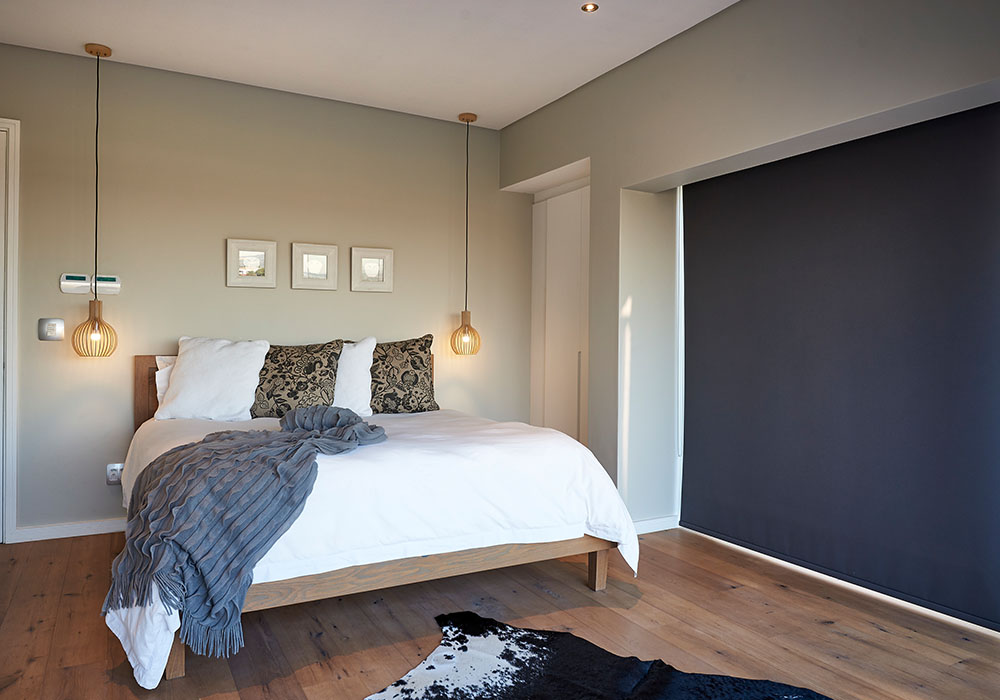
Curtains, if darkness is the priority. Ripple Blockout curtains use an acrylic or silicone backing with a white exterior and a weighted hem, and because they hang past the reveal they block the light leak down the sides that every roller blind has. A blockout roller darkens the glass, but the reveal edges still glow at sunrise.
Use a blind as well if you want daytime privacy without closing the curtains, which is how most bedrooms actually get used. A light filter roller behind Ripple curtains gives you a soft, private room at 10am and a genuinely dark one at 10pm. For a child’s bedroom, insist on cordless or motorised operation, or a proper cleat, because a hanging cord in a cot room is not worth the saving. Our bedroom blinds page shows the combinations installed.
Which is better for a kitchen or bathroom?
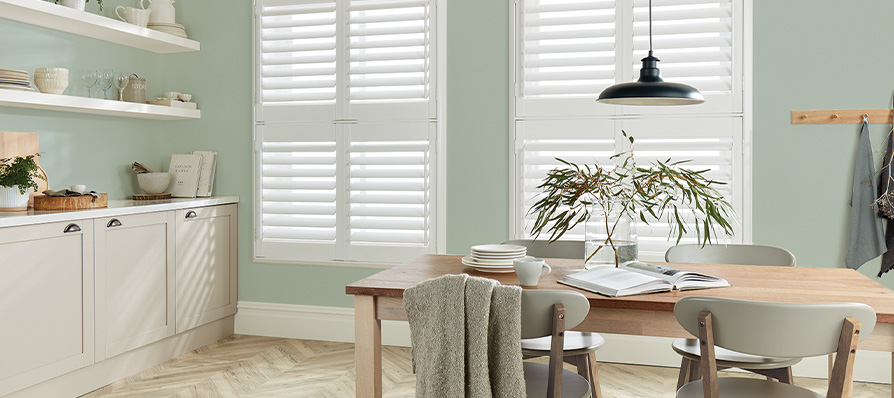
Blinds, without much argument. Fabric in a kitchen absorbs cooking oils and holds the smell, and fabric in a bathroom stays damp. A wipeable blind fitted inside the reveal keeps the window clear of the counter and the basin, and it dries between uses.
The specific mistake we see is hardwood venetians in a bathroom. Basswood slats look superb in a study and warp in steam. Use 35mm aluminium venetians instead for the same clean horizontal line with no warping risk, and they happen to be one of the most cost effective coverings on the range. See the options on the venetian blinds page and the bathroom blinds page.
What works on sliding doors and open plan walls?
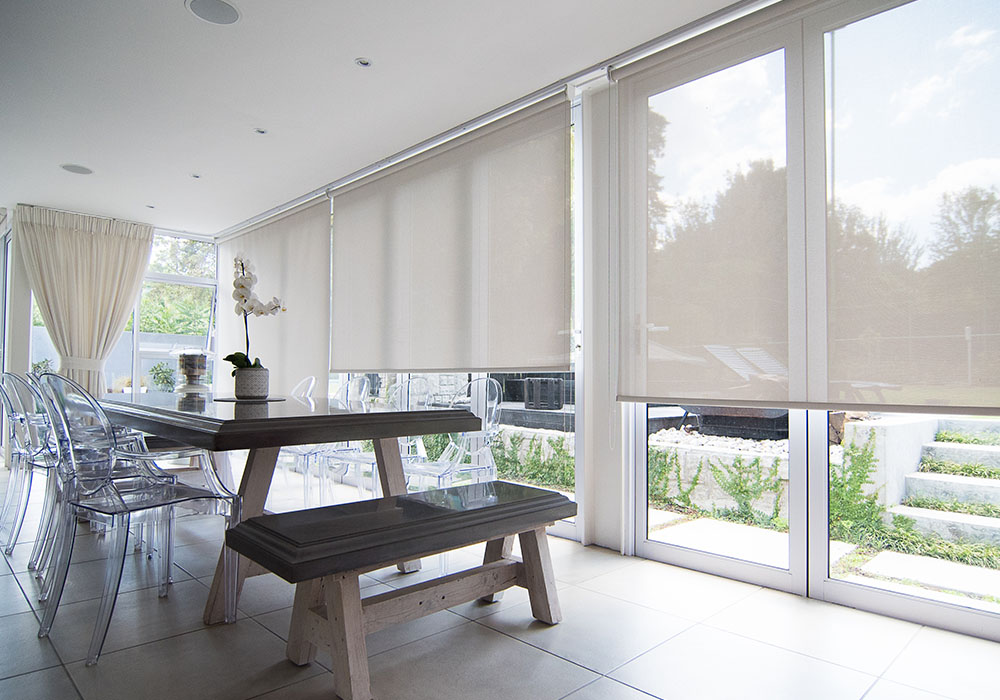
Check the span before anything else. A single roller blind reaches 4000mm wide and 5000mm long. Vision day and night blinds stop at 2200mm wide, cellular blinds at 2200mm, and wood venetians at 2440mm. A 6 metre stacking door exceeds every one of those, so it becomes multiple blinds, a wide format product, or curtains on a single track.
Curtains have the advantage here, because a track can run the full wall and the fabric stacks off the glass when open. Where a client wants the blind look across a big opening, wide format products are made for exactly that. Open plan living rooms often end up with blinds on the windows and one curtain run on the door wall, which reads as deliberate rather than mixed. Our open plan living room page shows how that resolves.
Can you use blinds and curtains together?
Yes, and layering is usually the better answer in a bedroom or main living room. The standard pairing is a light filtering layer against the glass for daytime privacy, and a heavier blockout layer for night. You can do that with a roller blind behind curtains, or with a Ripple Voils and Blockout combination that puts both layers on one system.
The layered approach also solves the awkward middle of the day, when a bright room is either fully exposed or fully dark. A day and night blind does the same job in one product by sliding striped translucent and opaque bands past each other, which suits picture windows where you want a mix of view and privacy from a single control.
Should your blinds match your curtains?
They should relate, not match. Matching a blind and a curtain in the same colour usually flattens a window, because the two treatments have different textures and reflect light differently. The reliable approach is to keep the blind quiet and let the curtain carry the colour, or the reverse if the blind is the feature.
In practice, the blind is the one you look at every day with the curtains open, so it should sit close to the wall tone. The curtain is the one that reads as a colour block when closed, so that is where a client’s fabric choice belongs. If you want a single opinion rather than a rule, bring a photo of the room to your quote and we will tell you which of the two should do the talking.

Blinds or curtains: the room by room answer
Use this as the shortcut. It reflects what people actually order, not what looks best in a catalogue photograph.
| Room | Usually better | Why | Watch out for |
|---|---|---|---|
| Bedroom | Blockout curtains, plus a light filter blind | Curtains kill the reveal light leak, the blind gives daytime privacy | A blockout roller alone still glows at the edges |
| Child’s bedroom | Cordless or motorised blind | Safety first, and it survives being pulled | Hanging cords near a cot or bed |
| Bathroom | Aluminium venetian or a wipeable roller | Handles steam, dries between uses | Hardwood slats warp in a bathroom |
| Kitchen | Roller or aluminium venetian | Wipes clean, keeps the counter clear | Fabric holds cooking odours |
| Living room | Either, often both | Screen fabric kills glare on the TV, curtains warm the room | Choosing on looks before checking afternoon glare |
| Open plan and sliding doors | Curtains on a track, or wide format blinds | A track spans further than most single blinds | Blind width limits, from 2200mm to 4000mm by product |
| Dining room | Curtains, or a day and night blind | Evening use rewards softness and privacy on demand | Vision blinds dislike being lifted constantly |
| Patio and veranda | Outdoor blinds | Interior fabrics do not survive sun and rain | Using an indoor product outside |
Which costs less over ten years?
Blinds usually cost less to own, because they are wiped rather than laundered and they do not need taking down. Curtains carry a recurring cleaning cost and, in a sunny room, a replacement cost, since fabric fades where a hard treatment simply keeps working. Against that, curtains are the cheaper way to cover a very wide opening. How you look after either one changes those numbers a lot, which our guide to cleaning blinds and curtains covers per fabric.
Homeowners tend to compare only the quote, which is why the how much do blinds cost conversation repeats endlessly online: people budget for the product and forget fitting, hardware and the cost of getting it wrong. Price a room on ten years of use rather than on the cheapest line, and the answer changes more often than you would expect.
COMMON QUESTIONS
Frequently asked questions
Are blinds or curtains better for blocking light?
Curtains, if you want a genuinely dark room. A blockout roller stops light through the fabric but leaves gaps down the sides of the reveal, while blockout curtains hang past the opening and cover those gaps. Layering both gives the best result in a bedroom.
Can you put curtains over blinds?
Yes, and it is the most common layered setup we install. Fit the blind inside the reveal and hang the curtains outside it on a track or rod, leaving enough clearance that the curtain does not foul the blind’s bottom bar or chain.
Are blinds or curtains better for insulation?
Curtains add more mass across the whole window wall, but cellular blinds are the strongest single performer, because their honeycomb structure traps a layer of air between the room and the glass. In a cold room, a cellular blind with curtains over it beats either on its own.
Which is better for a rental property?
Blinds, in most cases. They survive tenant turnover, they wipe clean between occupants, and they are fitted rather than removable, so they tend to still be there at the end of a lease. Choose aluminium venetians or a plain roller rather than anything delicate.
Do blinds or curtains suit large windows better?
Curtains on a track handle the widest openings, because a track can run further than a single blind can span. Where the blind look is wanted across a big window, use a wide format product designed for it rather than pushing a standard blind past its limit.
THE GALAXY STANDARD
Get a room by room recommendation
The fastest way through this decision is to have someone stand in the room at the time of day it bothers you. A free measure covers span limits, glare direction, moisture and how each window is actually used, and you get a per room answer rather than a general rule. Browse the blinds range and the Ripple curtain range first if you want a shortlist in mind.
Request a free measure and quote, or WhatsApp photos of the rooms you are unsure about, taken at the hour the light is worst.